February Is National Debt Awareness Month: Time to Get Real About Debt
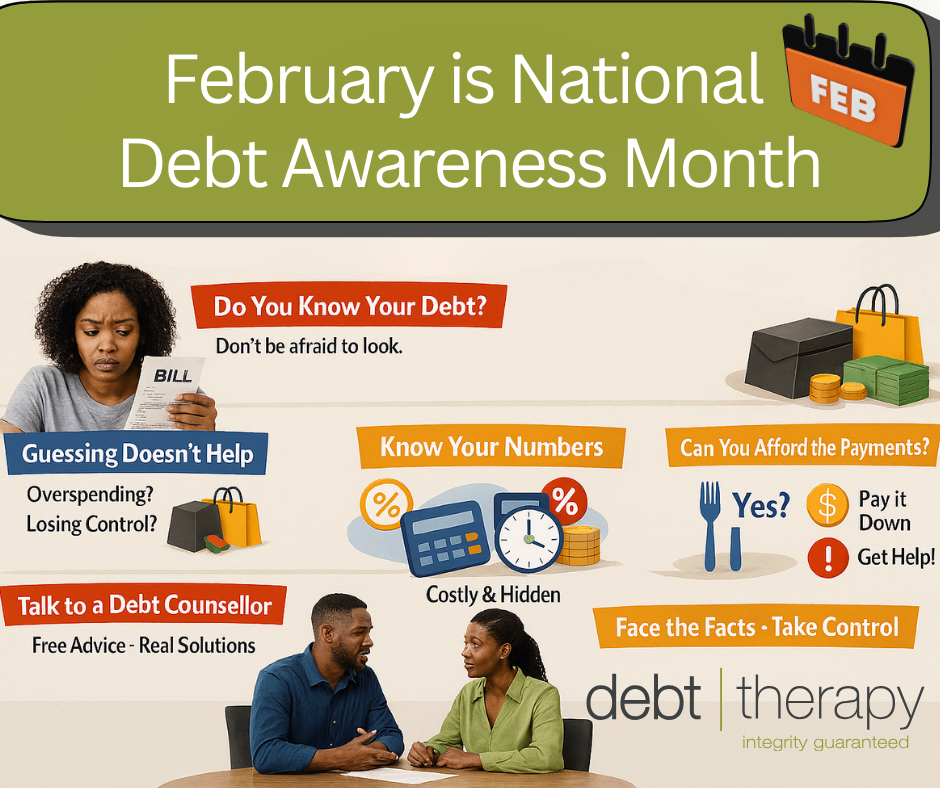
Do you actually know how much debt you have right now?
For many South Africans, this is not an easy question to answer. Not because people are irresponsible or careless, but because looking closely at debt can feel overwhelming. Sitting down, opening bank statements, logging into apps, and seeing all the numbers in one place can trigger stress, anxiety, and even fear. That is exactly why February, National Debt Awareness Month, is so important. It serves as a reminder that avoiding the numbers does not make debt disappear. In fact, debt tends to grow quietly when it is ignored. Facing your debt honestly is often the first step toward regaining a sense of control.
Avoiding debt is human but guessing is risky
When the cost of living keeps rising and income feels stretched, it is normal to avoid detailed financial check-ups. Many people have a rough idea of what they owe, but not the full picture. “I think it’s around this much” becomes the default approach. The problem with guessing is that it hides reality. Without accurate numbers, it is easy to keep using credit to survive, believing things are manageable when they are slowly getting worse. Missed payments, rising interest, and mounting fees can quietly push people deeper into trouble.
Knowing your real numbers brings clarity and relief
Writing down everything you owe can feel intimidating, but it removes uncertainty. Once you know exactly what you owe, who you owe it to, and what it costs you every month, the mental burden often starts to ease.
Clear numbers replace anxiety with information. Instead of worrying about “what if,” you can start asking practical questions:
- Can I afford these repayments?
- Which debts cost me the most?
- What options do I realistically have?
Debt becomes something you can plan around, rather than something silently controlling your life.
Interest is often the hidden cost people underestimate
One of the biggest surprises for South African consumers is how much interest they are actually paying. Credit cards, store cards, personal loans, overdrafts, and short-term loans often carry high interest rates. When you only focus on the minimum repayment, the real cost stays hidden. Over time, interest can exceed the original amount borrowed. What feels manageable month to month can become extremely expensive over a few years.
Minimum repayments keep people stuck for longer than expected
Minimum repayments can feel like a lifeline when money is tight. But they come with a downside. Paying only the minimum stretches debt over many years, dramatically increasing the total cost. This is how people end up paying for the same debt again and again, without seeing the balance move in a meaningful way. Understanding this is not about blame, it is about awareness.
The first practical step: list all your debts
Start with something simple and practical:
- Open your banking apps or gather your bank statements
- Write down every credit provider
- Note the outstanding balance and monthly repayment
- If possible, include interest rates and loan terms
Seeing the total can be a shock. That reaction is normal. It does not mean you have failed, it means you now have accurate information.
The key question: are your repayments affordable?
Once everything is listed, ask yourself whether you can afford your repayments and still cover essentials like food, transport, school costs, utilities, and medical expenses. If the answer is yes, that is a good starting point. You can then focus on paying off high-interest debts faster or clearing smaller accounts to free up cash flow. If the answer is no, that is not a personal failure. It is simply a signal that your debt structure may need help.
When debt feels unmanageable, support matters
Many South Africans reach a point where repayments are no longer sustainable, even though they are trying their best. Speaking to multiple credit providers can be stressful and intimidating, especially when you are already under pressure. This is where speaking to a registered debt counsellor can be helpful. A consultation is free, and the goal is not to sell anything, but to assess affordability, explain your rights, and outline your options which may or may not include debt review. Getting advice early often prevents situations from becoming far more serious later.
Debt Awareness Month is about facing the truth with support
Ignoring debt rarely leads to relief. Understanding your full financial picture creates options. February is a reminder that you are not alone, and that help is available if you need it. Knowing your numbers is the first step toward any solution. And if you feel stuck or unsure where to start, speaking to a registered debt counsellor can give you clarity and direction without pressure or judgement.
#DebtTherapySA #DebtCounselling #DebtAwareness #TakeControl #FinancialFreedomSA #MoneyMattersSA #SmartFinance #BudgetBetter #DebtFreeJourney #SouthAfricaFinance #SecureYourFuture #MakeTheChange #FinancialWellnessSA