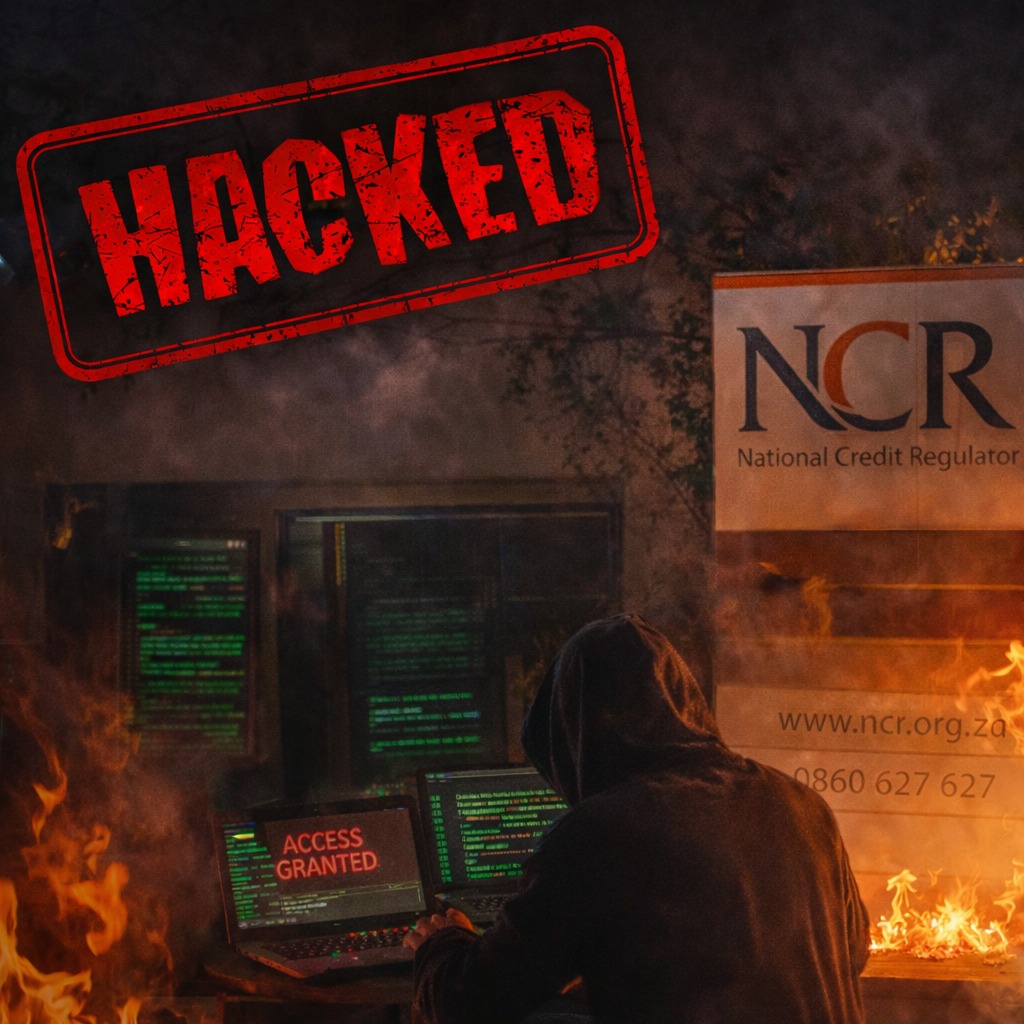
NCR HACKED – What does that mean for you?
What happened with the NCR
- Ransomware group DragonForce has claimed responsibility for hacking the National Credit Regulator.
- The group reportedly published over 42 GB of data on the dark web after the attack.
- The breach was disclosed by the NCR in December 2025, after its systems were disrupted by a cyberattack.
The NCR responded
- The NCR detected unusual activity and isolated affected systems, disabled remote access, and applied enhanced security controls to contain the incident.
- It engaged independent cybersecurity specialists to investigate and recover systems.
- The agency has notified relevant regulators, including the Information Regulator, as required by law.
Data exposure and investigation
- The NCR is still investigating exactly what was taken and whether personal information was compromised.
- As of now, there’s no confirmed list of specific data types or individuals affected — that is still being verified.
Precautions for stakeholders
The NCR has advised stakeholders to:
- Be vigilant with suspicious emails or messages.
- Avoid unknown links or attachments.
- Watch for unusual communications claiming to be from the NCR.
- Consider Protective Registration with the Southern African Fraud Prevention Service to help protect against identity fraud.
Context: broader cybersecurity issues in South Africa
This attack is part of a wider trend of cyber incidents affecting local organisations and government systems, from security flaws in financial systems to malware on government infrastructure and highlighting ongoing cybersecurity challenges.
READ THE FULL ARTICLE HERE
https://mybroadband.co.za/news/security/624587-south-african-national-credit-regulator-hacked.html
Additional Steps You Should Take (Highly Recommended)
1. Credit Bureau Monitoring
Register (free or paid options) with:
- TransUnion
- Experian
- Compuscan
- XDS
 Watch for new enquiries or accounts
2. Bank & Account Vigilance
- Check bank statements weekly
- Activate SMS/email alerts
- Immediately dispute unfamiliar transactions
3. Beware of Scams
Expect:
- Phishing emails pretending to be NCR, banks, or debt counsellors
- Requests for ID documents or OTPs
 NCR and banks will not ask for OTPs or passwords.
4. If You’re in Debt Review
Given your industry involvement:
- Ensure client data is protected
- Notify affected consumers if required under POPIA
- Keep records in case NCR-related delays or system issues arise